
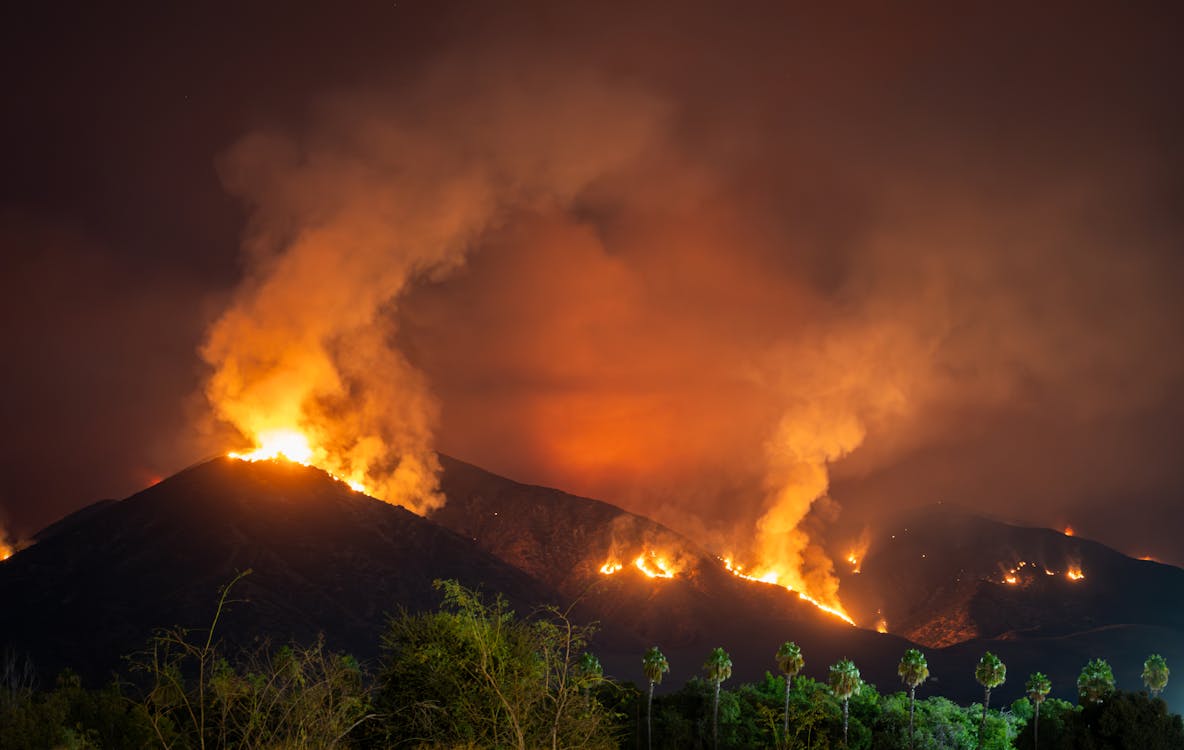
The January 2025 fires in the Los Angeles area were catastrophic. The Palisades and Eaton fires together destroyed thousands of structures, killed more than two dozen people, and forced evacuation of over 150,000 residents.
This post is not about blame or politics. It’s about concrete, actionable lessons for prepared Californians — because almost every failure at the individual level was predictable and preventable with preparation.
Lesson 1: The Evacuation Window Is Shorter Than You Think
Multiple residents reported less than 30 minutes of useful lead time. Some had less than 10 minutes. Fires during Santa Ana wind season can move in 60–80 mph gusts.
Your move: Begin evacuation at the Watch level, not the Order. Have a pre-packed go-bag and a pre-loaded vehicle list. Know your route before you need it. Drive it.
Lesson 2: Traffic Gridlock Is the Primary Hazard
Residents reported being trapped in stopped traffic with fire visible on multiple sides. Some abandoned vehicles and fled on foot.
Your move: Every minute you delay is multiple minutes of additional traffic. Know every road out of your neighborhood. Consider pedestrian or bicycle egress routes. Have a rally point outside your immediate area.
Lesson 3: Wireless Networks Failed Under Load
Cell networks experienced severe congestion. Residents couldn’t reach family, couldn’t get evacuation info, couldn’t use navigation apps.
Your move: Text over voice — SMS uses less bandwidth. Designate an out-of-state contact. Consider GMRS or ham radio. Download offline maps now. Have a battery-powered NOAA weather radio.
Lesson 4: Many People Didn’t Know Their Zone
Your move: Find your evacuation zone today — search “[your county] evacuation zone lookup.” Sign up for your county’s emergency alert system. Download the Watch Duty app. Know the difference between Watch, Warning, and Order.
Lesson 5: People Went Back Too Early
Post-fire debris fields are hazardous: unstable structures, contaminated air from burning synthetics, contaminated water, downed power lines carrying full voltage.
Your move: Do not return until official all-clear. If you must return early, wear P100 respirator minimum. Know how to assess a structure for re-entry safety. Have insurance documents accessible from outside the home.
Lesson 6: Defensible Space Is Not a Checkbox
The difference between structures that burned and those that didn’t was often directly correlated with defensible space. Ember exposure — embers traveling miles ahead of the fire front — is the primary ignition mechanism. Your roof, vents, and decks are your primary vulnerabilities.
Your move: Do your defensible space work. Zone 1 (0–30 feet): remove dead vegetation, clear combustibles, ember-resistant vents, clean gutters. Zone 2 (30–100 feet): reduce fuel continuity, prune trees.
The Through-Line
Every one of these lessons was known before January 2025. Every one will be relevant to the next major California wildfire. The difference between a clean evacuation and being trapped in traffic is almost entirely preparation made before the fire started.
Do the work now.